

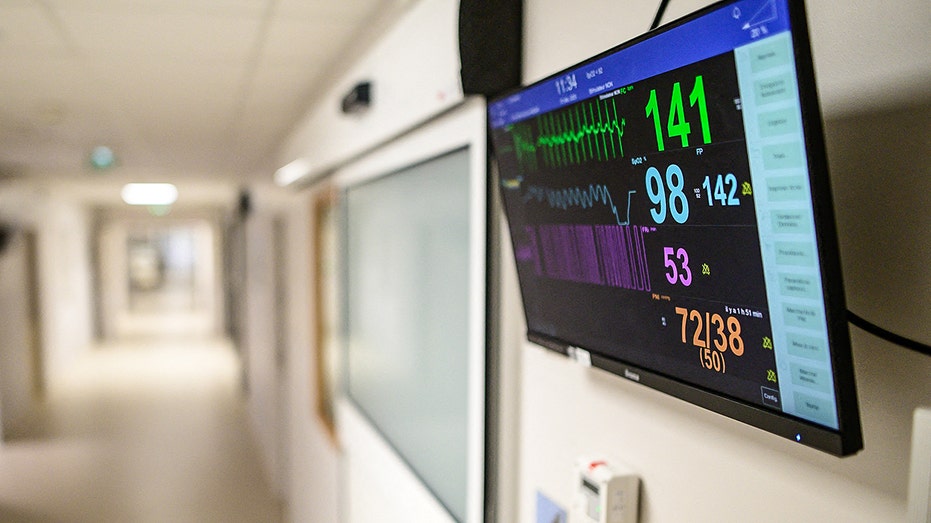

may be hiding a warning sign that doctors have missed for years. That is the big takeaway from new UC Berkeley research published in Nature. Researchers trained an artificial intelligence model to study ECGs, also called EKGs, and look for patterns tied to sudden cardiac death.
This is the scary part. Sudden cardiac arrest can strike people with known heart problems. However, it can also hit younger athletes and people who never knew they were at risk.
Each year, hundreds of thousands of Americans die after cardiac arrest. Once it happens outside a hospital, survival can drop fast. CPR and a defibrillator can save lives, but timing is everything.
Now, spot some patients earlier, while their hearts still look normal by today’s common tests.
Sign up for my FREE CyberGuy Report
An ECG records the electrical activity of your heart. It creates the familiar spikes and waves doctors review to check rhythm and other heart clues.
For this study, researchers used more than 440,000 ECGs They paired those scans with death certificates and health records. Then they trained the AI model to look for waveform patterns linked to sudden cardiac death.
After that, they tested the model on separate patient data from the U.S. and Taiwan. That step is important because medical AI often looks good in one dataset, then fails in the real world. Here, the model held up across very different health systems.
Doctors often use a measurement called left ventricular ejection fraction, or LVEF, to judge risk. In plain terms, it shows how much blood the heart pushes out with each beat.
If that number falls below a certain threshold, a patient may qualify for an implantable defibrillator. That device can shock the heart back into rhythm during a dangerous event.
However, this method leaves big gaps. Many people who die suddenly never had that deeper heart evaluation. Others may have a heart that pumps normally but still be at risk for a dangerous rhythm problem.
The UC Berkeley model found a high-risk group with a 7% annual rate of sudden cardiac death. The standard reduced LVEF group had a 4.6% annual rate.
Even more striking, most patients flagged by the AI were missed by the LVEF method. In other words, a routine ECG may hold warning signs that current screening overlooks.
The researchers did more than ask AI for a risk score. They also tried to understand what the model saw. That is important because medical AI can become a black box if doctors get an answer with no clear reason behind it.
To dig deeper, the team used another AI system to compare low-risk and high-risk ECG patterns. Think of it as a way to see how a normal-looking heartbeat pattern could shift into a higher-risk one.
That comparison pointed to a visible feature in one part of the ECG called aVL. This is one of the standard views doctors use to read the heart’s electrical activity. The feature showed up in the QRS complex, the part of the ECG that reflects the heart’s main electrical signal during each beat.
Researchers say this signal strongly predicted sudden cardiac death. They also say it had not been previously described in That raises a fascinating possibility. AI may help doctors make better predictions and spot warning signs humans have missed.
An implantable defibrillator can save a life. Still, putting one in the wrong patient has risks. The procedure can be invasive and costly. Also, many devices placed under current rules never need to fire.
So Miss the patient who needs the device and the result can be deadly. Implant too many and patients face procedures they may never need.
This new AI tool could help narrow that gap. It may flag patients who need closer monitoring before doctors consider bigger steps.
The next phase is already underway. Researchers are working with health systems in Sweden, Taiwan and the U.S. to test the algorithm on hospital



